Full Stack Software Engineer | Java | Spring Boot | React | Distributed Systems | AWS | Kafka
Building scalablefull stack systemsthat solve real problems.
I'm Mohamed Elaraby, a Full Stack Software Engineer with 5+ years of experience building Java and Spring Boot microservices, React web applications, secure APIs, and distributed systems on AWS. My work spans Kafka and RabbitMQ integrations and production troubleshooting.

Ask before you scroll.
A curated assistant that answers from Mohamed's verified background — no invented claims, and it says so when something isn't known.
Curated portfolio and system-design knowledge, not a live AI model.
Numbers that matter.
Developed Java and Spring Boot microservices, implemented Kafka and RabbitMQ integrations, worked with AWS infrastructure and distributed applications, and developed secure APIs and enterprise integrations. Architecture contributions, production troubleshooting and collaborative problem-solving complement hands-on engineering and training 60+ students in OOP.
Systems that carry real load.
Five case studies. Switch the lens to read each one as an engineer, a business owner, or anyone curious.
 Case study · Backend systems
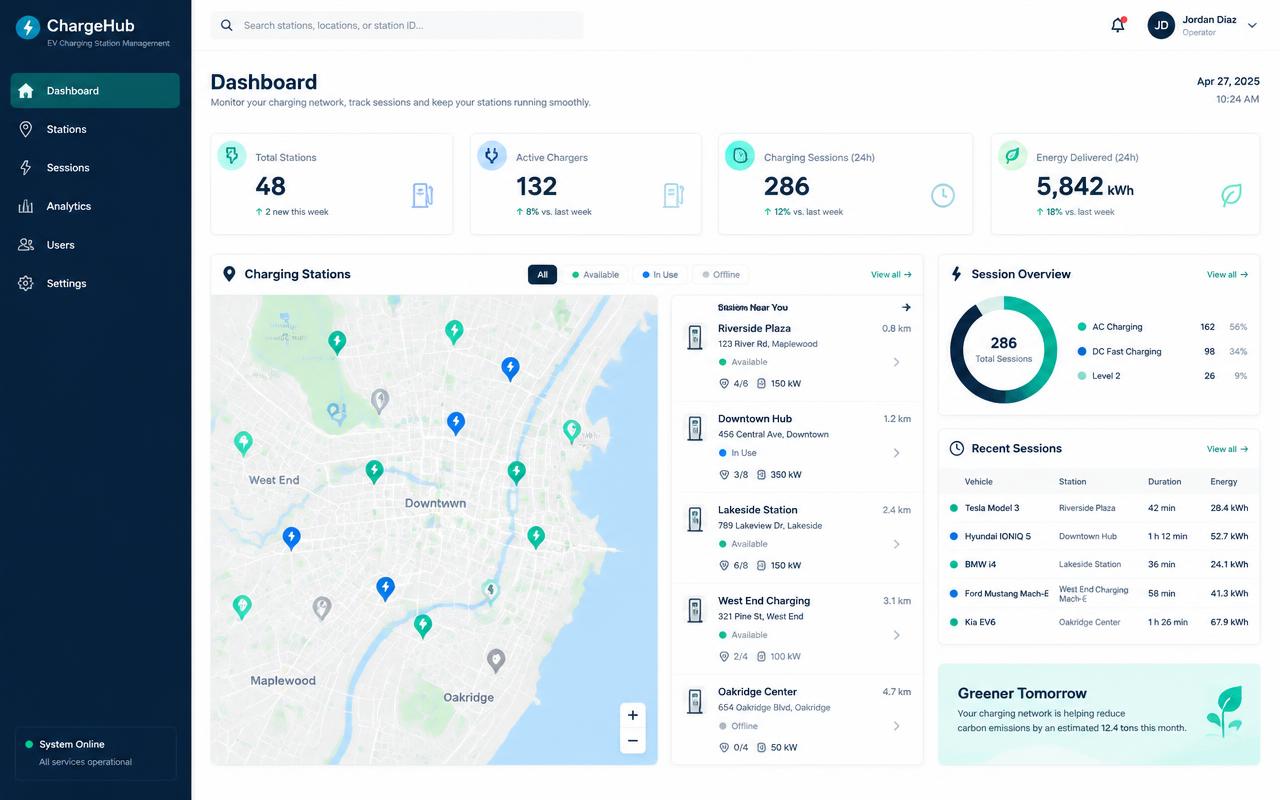
EVUNITY — EV Charging Platform
Supported 300+ charging stations across Egypt and Saudi Arabia; contributed to systems achieving 99.9% uptime.
Developed Java and Spring Boot microservices and contributed to the architecture of distributed services handling OCPP 1.6 charger-to-cloud communication: boot notifications, heartbeats, authorize/start/stop transaction flows, and meter values. REST and GraphQL APIs serve operator dashboards; gRPC handles internal service-to-service calls. Kafka and RabbitMQ decouple session events from billing and notification pipelines. PostgreSQL stores transactional state, MongoDB holds charger telemetry, and Redis caches session and tariff lookups. OCPI 2.2.1 supports partner roaming integrations; secure enterprise APIs connect operator and partner systems.
The path so far.
- 1
- Developed backend services for an EV-charging platform supporting 300+ charging stations.
- Built and maintained APIs and microservices using Java and Spring Boot.
- Worked with REST, GraphQL, and gRPC integrations.
- Worked on OCPP 1.6 charger-to-cloud communication and OCPI 2.2.1 roaming integrations.
- Used Kafka and RabbitMQ for event-driven processing.
- Worked with PostgreSQL, MongoDB, Redis, and AWS.
- Used Docker, Kubernetes, CI/CD pipelines, and observability tools.
- Contributed to systems achieving 99.9% uptime, including production troubleshooting and monitoring.
- Contributed to architecture decisions, secure enterprise APIs, code quality and collaborative problem-solving.
- 2
- 3
- 4
- 5
Pick two. See how they connect.
Tap any two to see how they work together in a real engineering scenario.
Backend
Distributed systems
Databases
Cloud & DevOps
Observability
AI
Frontend & full stack
Try Java + Kafka, Spring Boot + PostgreSQL, or Prometheus + Grafana.
System-design knowledge
Engineering principles and trade-offs, separate from project achievements.
Zero-downtime deployment
Rolling deployments replace instances gradually; blue-green deployments switch traffic between two environments; canary releases expose a small share of traffic first. Readiness checks keep traffic away from unready instances, while graceful shutdown drains in-flight requests. Backward-compatible APIs and expand–migrate–contract database changes let old and new versions coexist. Monitor errors and latency, keep spare capacity, and plan rollback. For long-lived OCPP WebSocket connections, draining and reconnect behavior need explicit planning; a rolling rollout alone does not guarantee zero downtime.
Idempotency & safe retries
Idempotency means repeating an operation has the same intended effect as performing it once. For a charging-session command or billing request, use a stable operation ID, validate the payload, and atomically record the outcome with the state change. A unique constraint or durable deduplication record prevents concurrent duplicates; repeated requests return the recorded outcome. Retry transient failures with bounded exponential backoff and jitter. At-least-once message delivery can produce duplicates, and Kafka producer idempotence alone does not guarantee exactly-once effects in an external database or payment service.
Consistency & the transactional outbox
A database write and an event publish are separate failure points. The transactional outbox stores the business change and an outgoing event in one database transaction; a relay publishes committed events later. Publication may repeat, so consumers still need idempotency. Eventual consistency requires explicit ordering, version checks and reconciliation. A saga coordinates multi-service work through local transactions and compensating actions; it is not a global ACID transaction.
Resilience & backpressure
Set timeouts and bound concurrency so one slow dependency cannot consume every worker. Circuit breakers temporarily stop calls to a failing dependency; bulkheads isolate resource pools. Queue limits and backpressure prevent unbounded work, while dead-letter queues retain repeatedly failing messages for investigation. Avoid retries at every layer: amplified retries can worsen an outage. Define which operations may degrade gracefully and which must fail safely.
Availability & observability
Define availability and latency SLOs around user-visible operations, not just healthy servers. Track request rate, errors, latency percentiles and resource saturation; correlate metrics, structured logs and traces with request IDs. Redundancy and tested failover reduce single points of failure, but recovery also needs backups and restore drills. An error budget informs release risk, and alerts should distinguish actionable user impact from noisy infrastructure signals.
Let's build something reliable.
Based in Fairfield, Iowa (Central Time). Open to Full Stack and Software Engineer roles across the U.S., including Chicago.
Draft your first message
Fill in what you know. Anything left blank stays in [brackets] for you to complete.